Monday, December 10, 2012

[Review] Shopclass on Demand Streaming Videos


A large focus of this blog has been to explore the possibilities of learning woodworking alone. Fueled mostly by The Joiners Apprentice (which just today has been made available as an audiobook), I have also read many other books and viewed a number of videos.

Nothing changes the fact that woodworking must be learned by doing. A private lecture with the greatest woodworking instructor possible will still not get you there until you make the cuts on your own. A great teacher, however, will encourage, inspire and inform you, and videos can provide much of this. As one woodworking instructor told me, a main task of a teacher is to give the student permission to teach themselves.

And so, I was glad to review the Popular Woodworking service "Shop Class on Demand", which allows one to few hundreds of hours of content over the internet. This is essentiaally Netflix for woodworkers, and given the lack of woodworking content on Netflix, this is a great thing.

Full disclosure: I was given a 6-month media pass to review this service at no cost. I therefore cannot honestly assay the "value" as if the payment had come from my own wallet. I do believe I can effectively convey my impressions of the service, though.

Once an account is created, it is painless to load and view the videos. The audio and video quality are on par with any other major streaming service. My only technical complaint has been that if a video is paused for a length of time (say, overnight) it can be difficult to resume.

The videos themselves run a huge gamut from power tool techniques to several seasons of The Woodwrights Shop. Several (if not all) of Christopher Schwarz's videos are also available.

Many of the technique-based videos are the type which you may want to view over and over, perhaps even playing in your shop. In cases like this, you might want to actually own a copy of the content. This service, in that case, comes into usefulness as a way to preview these DVDs before commiting to purchase. You may opt to watch a single video for a few dollars before paying full price for the DVD.

If you plan to do a great deal of viewing, the unlimited plans make a lot of sense. With busy family and shop life, I do not have much time for viewing, but did stay up late a few times to get a sense of the type of material available through this service.

All in all, I give the service a thumbs up. I am not sure I agree with the pricing structure, but media is always a tricky game and as mentioned I did not actually pay for this service. Given my limited time for viewing, and limited interest in watching videos to begin with, I would say this service is not for me, but it very well might be for you. I would certainly love to have access to the several decades of The Woodwright's Shop, but no idea when I would get around to watching them.

I am grateful that Popular Woodworking is attempting to get with the times and explore modern media, and hope that this service is a success. Check it out here: Shop Class on Demand

Saturday, December 1, 2012

[Offtopic?] Where Wheels and Wood Collide

Beetles and Bikes. How do these relate to woodworking?

In Southeast Asian jungles, secretions from the lac beetle are harvested and rendered into the wonderous substance we call shellac. Durable, smooth, non-toxic, and attractive, it has long been the coating of choice for fine cabinetry and even fruit. Yep, you have most definitely eaten the stuff.

Sure, we all know shellac is a great finish for woodworking projects, but how does the amber-tinted stuff affect other materials, like say, cotton?

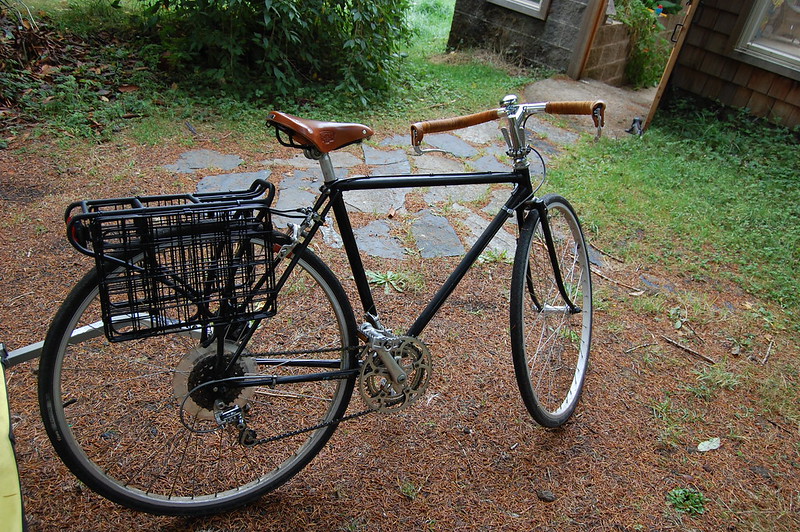
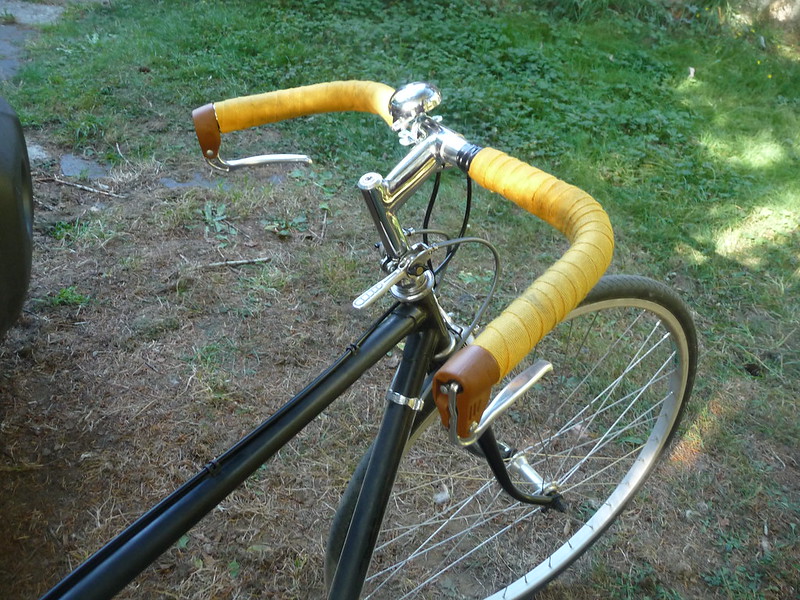
Here are my bike handlebars with a couple rolls of fresh yellow tape:


The cloth feels fine, but will rapidly stain and eventually fall apart with exposure to the elements. How about 3 coats of amber shellac?


It now almost looks like leather, no longer garish yellow. The feel is much better as well. The shellac fills in the pores in the coarse cotton cloth and leaves a smoother, more pleasant and just slightly tacky texture. It will now shed water, and resist rotting for decades, provided a new coat is applied here and there. The photographs do not show the change in texture much, but should convey the earthy, warm glow that results from this wonderful substance mixing with another organic material.

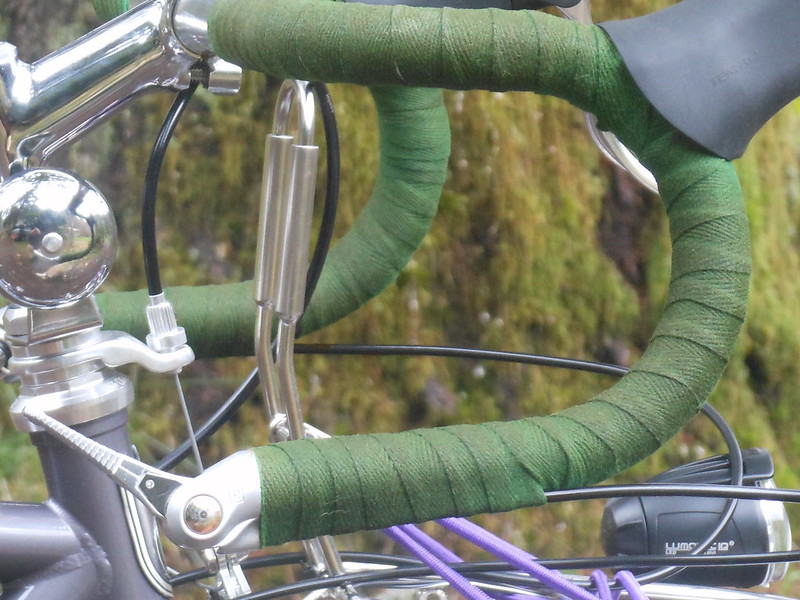
I've been impressed enough with this combination that I have applied it to another bike as well. This time, starting with a medium-obnoxious "grass green" which started like this:


After 3 coats of amber shellac, we end up with a pleasant forest green. One more coat might turn it olive, and I might just do that. Here is the current result:


The texture is improved as before, and the loud color is muted just enough. It will continue to burnish and mellow with age, just like it does on wood. It makes me wonder what other materials shellac could improve. Twine-wrapped tool handles? Leather hinges? If you have used shellac in non-wood finishing contexts, I would love to hear about it.

Ok, so shellac is great, but why talk about bikes on a woodworking blog?

I could easily go into a rant about how traditional woodworking and utilitarian/sport-touring cycling are just two manifestations of the same ideals, but that would likely bore most of you, and if you get it, you already get it. Instead, I will get back to the topic at hand, and show some more shellac:


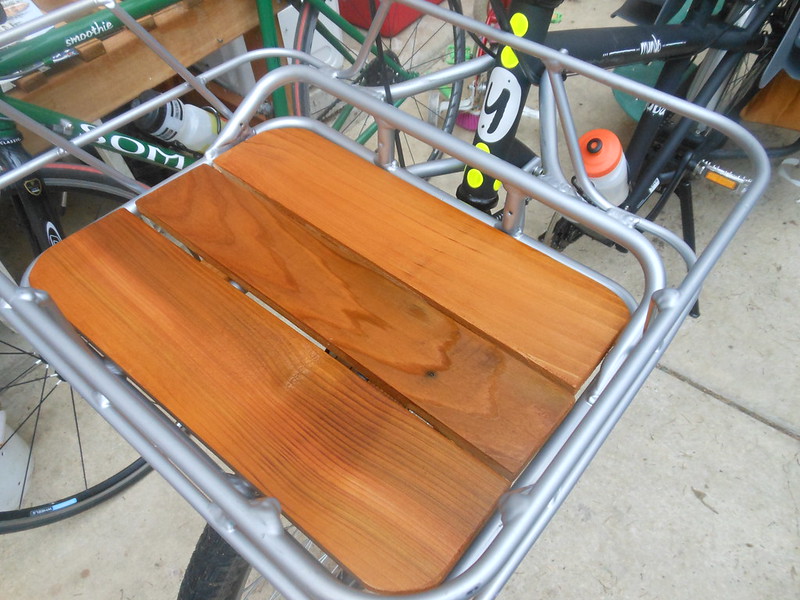
This insert for the bottom of a metal basket is made of old grey cedar fenceboards which I planed down substantially, shaped with a rasp, and nailed together using cross-battens on the bottom (which double as anchor points to secure the insert to the basket). Inserts like this are commercially available, and possibly a bit nicer than my one-afternoon job, but my cost was just time and a few grains of shellac. The wood is now durable, relatively rain-proof, and much more handsome than the naked rack or the raw grey cedar was.

Wine crates have been a common sight on French "porteur" style delivery bikes for many decades, but otherwise wooden luggage is not generally considered practical for bicycles. I consulted with Jan Heine of Compass Bicycles, generally regarded as the expert's expert on "Golden Age" bicycles, and he concurs that wooden luggage has never been popular. He speculates that aside from the weight, wood is too fragile in the event of an accident to warrant its use for anything more than casual riding. He is probably right.

I have it in mind to push the limits of absuridty, though, and eventually explore wooden trunk boxes as well as porteur front racks for city bikes. While indeed too heavy for extended trouing, it seems to me that thin, lightweight wood, a simple lock, and some sensible design could provide a useful bit of protection and organization for cargo while running errands (such as fetching coffee and bagels) around town.

In the meantime, though, thanks to all those lac beetles for giving us this precious goop!

Thursday, November 29, 2012

Join me in Joinery!


I've mentioned this before, but here it is again: I'll be in Port Townsend, WA this winter/spring for the Woodworking Foundation Course. While this should nicely complement my experience of working through the Joiner and Cabinet Maker, it is indeed pushing that chest of drawers project out a bit, but for a good reason. Being able to spend such a concentrated amount of time focusing on the craft and practice of woodworking is going to hugely benefit my mastery of the tools and techniques themselves. Additionally, I have been working 99% alone up to this point; having not only gifted instructors but other peers to work alongside is going to be a welcome change.

I've heard from Tim Lawson that there are still a couple spaces available in the course. So if you have wanted to dive head-first into the deep end of the pool, now is your chance! Enthusiastic Beginners are welcome but seasoned pros will also have much to learn. All tools are provided, so all you have to do is show up each day and pay attention. I am really looking forward to being able to spend some more time with Tim Lawson and Jim Tolpin, both of whom have worked quite hard to create this amazing school, and both of whom have personally been very helpful to me in my attempt to bootstrap my journey towards understanding traditional woodworking.

I'll be blogging my experience in the course as I can, although the more intense the course becomes, the less time and energy I may have for writing.

I am in the process now of packing up my shop and this is why there has not been much to post about woodworking itself on this blog recently. However, the blog is not going anywhere, and if the occasional silences bother you, I strongly suggest using a rss reader such as Google Reader, which allows you to "subscribe" to this blog and automatically receive the updates.

I hope to see some of you in the course, I am pretty stoked for it!

Friday, November 23, 2012

Thank You!

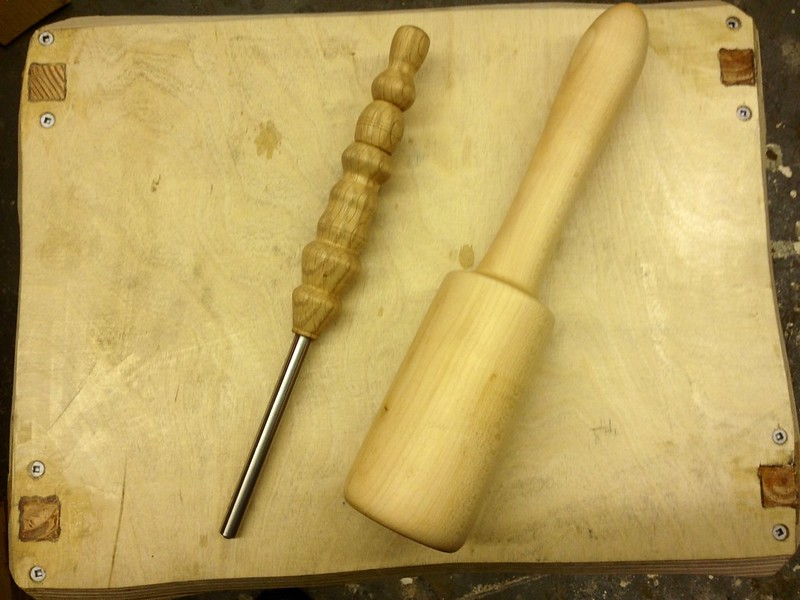
A fellow woodworker found some of my images on flickr and we started a conversation. Eventually, I saw he made a mallet from a St Louis Cardinal's baseball bat. I mentioned being a native St Louisian, and so he felt I should have it (the tool on the left is a burnisher):


Also, this was a gift from Mom Apprentice:


Thank you for your continuing support, everyone!

Actual woodworking is on its way, promise.

Monday, October 22, 2012

[WIA] Thoughts from those who attended (and did not)

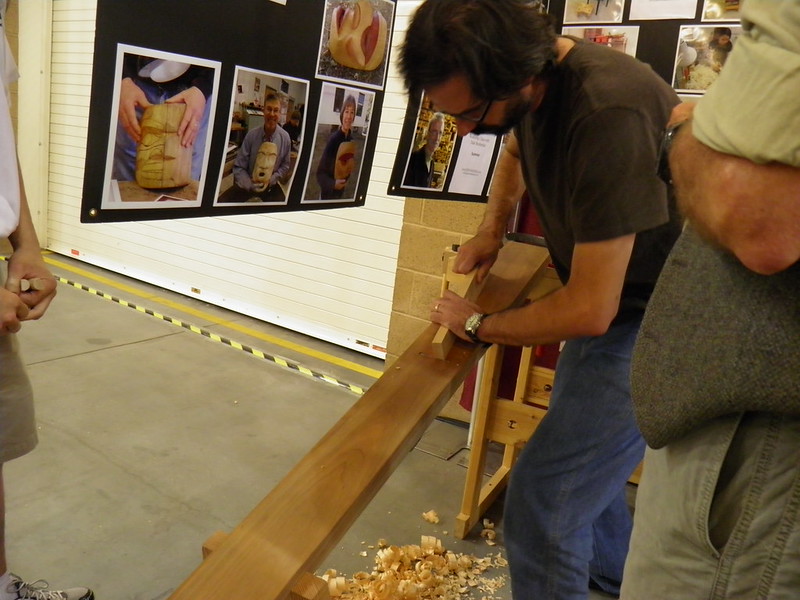
Everyone enjoys playing cooper!

I am planning to share some of my thoughts on Woodworking in America with the organizers, and would love to hear what you would have them know, as well.

What would you look for in a woodworking conference?

If you did attend, what did you most and least enjoy? What would you like to see change?

Part of my feeling was that the seminars themselves had an appealing focus; lots of nitty gritty discussion of traditional techniques, methods, and contexts. However, there was very little discussion about plugging this into the modern real world.

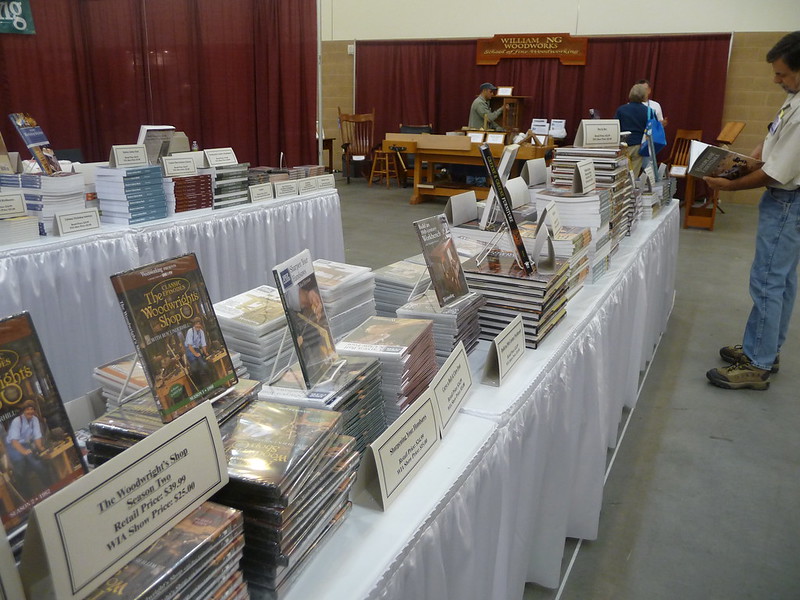
The marketplace had the usual suspects as far as hand tools go, but there was not as much hands-on or demonstration type exhibits as I would hope. I could do something about this, personally, and plan to if I return. I think a tiny joinery bench, a simple toolkit, and a stack of boards would go a long way to letting people see (and feel for themselves) the beauty of traditional methods.

One of my favorite aspects of the event was connecting with a couple younger woodworkers who had the passion and interest but simply did not know where to start. Next time I am there, I would like to have some better answers than I did this time. I feel it is vital to the community and the craft in general that younger people are taken seriously and welcomed earnestly. They need mentors available and I feel like the clock is ticking all too rapidly.

I certainly have some other, more complex reactions to the event and some of them I might flesh out here over time, others need a bit more thought and introspection. Nonetheless, these events are, in my opinion, very important to helping rebuild the networks of real-world interaction that are lost as a craft becomes a mere "hobby", often with only websites like this one to provide any sense of personal connection.

If you have anything to say about the event, or what your ideal event would be, feel free to post a comment here or send me a note. I will compile your thoughts and present them to the event organizers in hopes that the options for building woodworking community in the future will only improve.


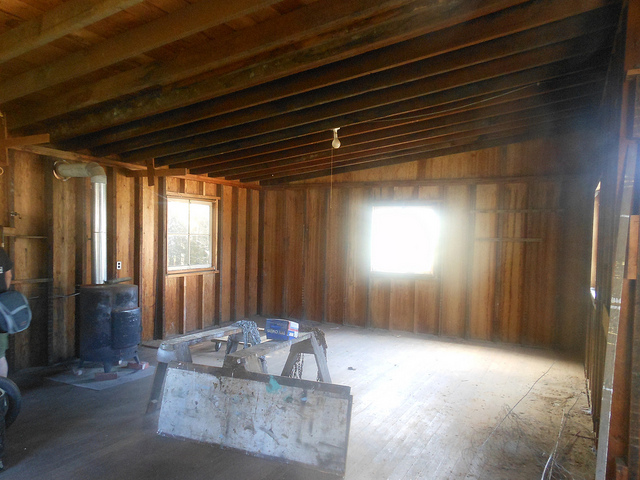
a new old shop

In other news, I am excited regarding a new shop space (hinted at in another post). It looks like this is moving forward and I will have a spacious new shop available in the future.

Ironically, perhaps, is that I will not be doing a lot of woodworking in this shop despite living next to it, because I am happy to announce that this winter I will be attending the Port Townsend School of Woodworking's intensive program. 3 months, 5 days a week, 9-5 (or more) of solid woodworking instruction and practice, meaning I will not be doing a whole lot outside of that. I'll still be updating the blog, and detailing what it is actually like to be immersed in a traditional woodworking program.

Much more soon.

This is the time of year when many of us can finally get back into the shop a little more earnestly, and also when the reading becomes more interesting for the armchair craftspeople. I hope that as this year winds down, health and peace are with you!


Thursday, October 18, 2012

[WIA] Pasadena Pics

I'm finally home after a long trip to Woodworking In America West, in Pasadena. This had a side-trip to Port Townsend, WA tacked onto the end.

My trusty Lumix camera finally gave up the ghost, but Tim Lawson saved me by letting me borrow his, so I was able to get a few shots.


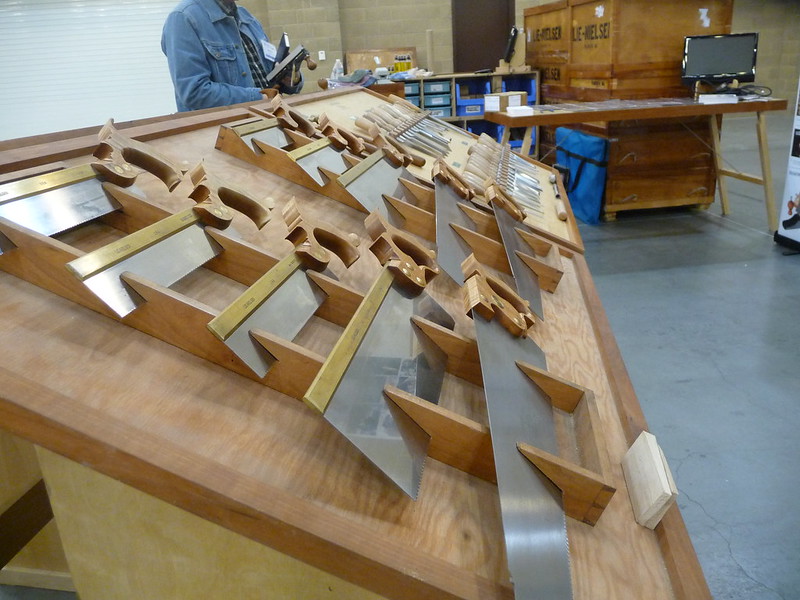
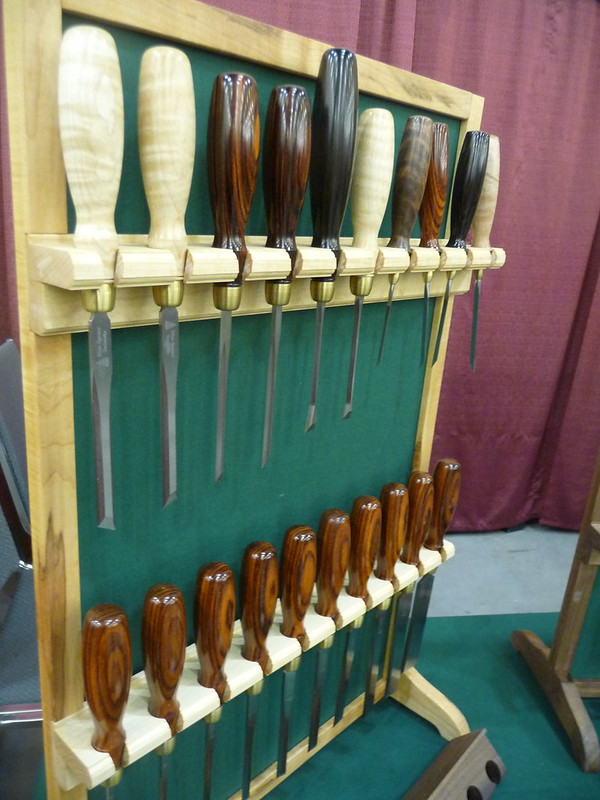
Blue Spruce tools always impress, and it is always a joy to talk to Dave Jeske, their maker.


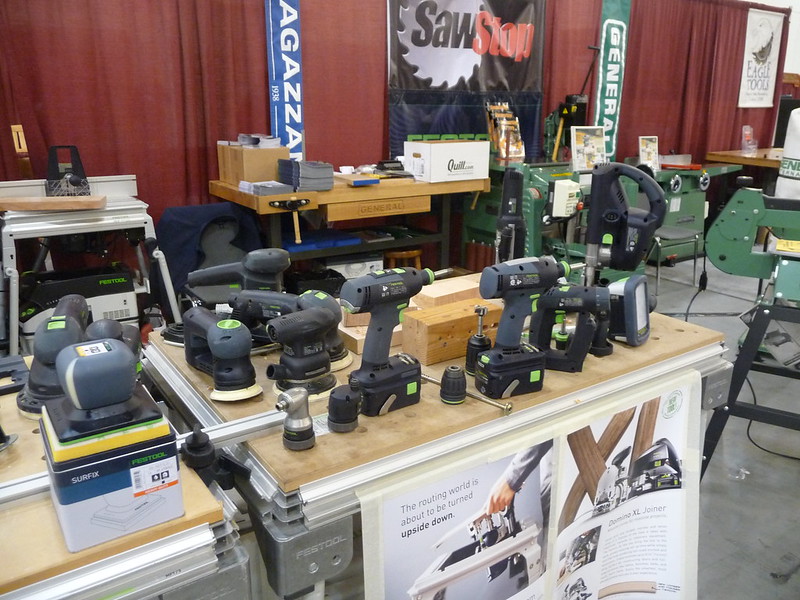
There were some power tools, too.


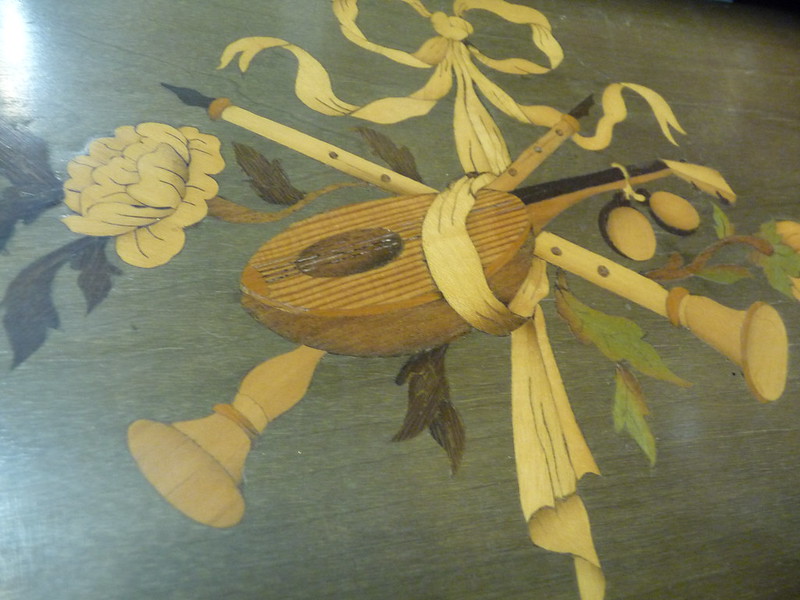
An example of marquetry:


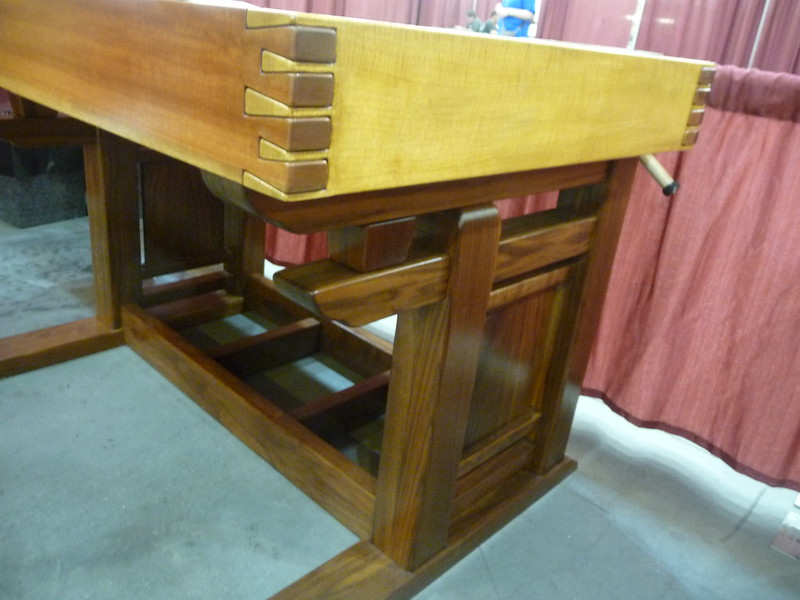
A bench almost too nice to use:


It was especially great to meet and speak with Chris Vesper, an Australian toolmaker. It is not possible to word how lovely his tools look and feel. They are not cheap, but he explained that he basically makes minimum wage because of the labor involved in producing them. I want one of the bevel gauges.


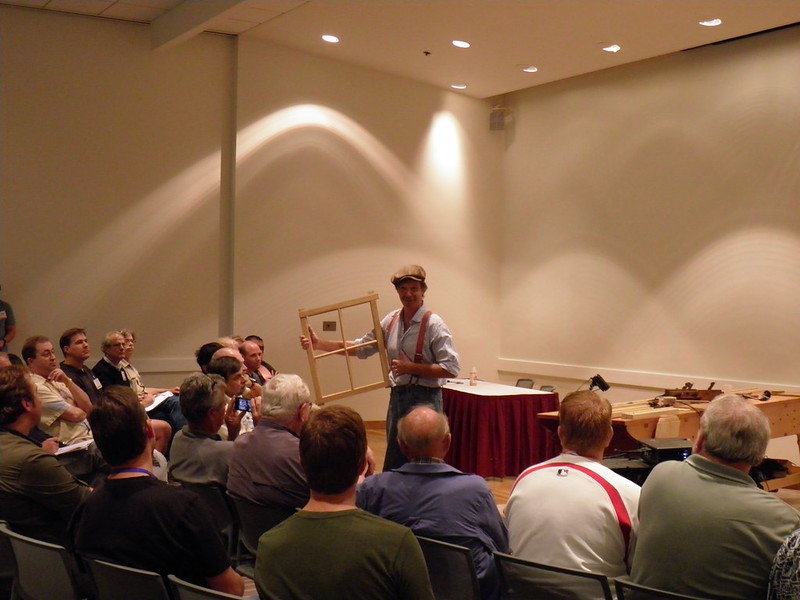
Christopher Schwarz led a talk on rapidly building a saw bench without having a sawbench to use. He also stuck with hardware-store tools. He did this atop an amazing bench built by Erik Mortensen, but refused to use the holdfasts, vises, and other workholding features as he was prentending to be using a "kitchen table". Erik was justifiably proud of his bench and I think found this hard to watch.


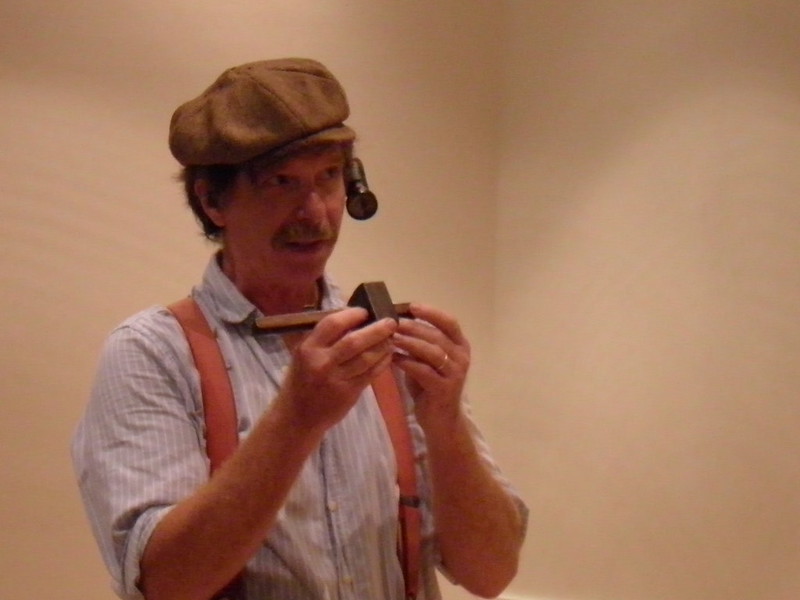
Roy Underhill is just the same in person as he is on his show.


He was trying out a POV camera, giving him an odd cyborg appearance and a very interesting video backdrop, especially when he looked at the screen and ripped a hole in the spacetime continuum via video feedback.


Dinner with friends


I had a number of complex reactions to the event and where it could or should go in the future, but that will be another post. I just wanted to get some images out there while they are somewhat fresh. There will be more to come, but for now I am glad to be home and will hopefully get a little shop time in after all of this talking about woodworking and not doing any!

Sunday, October 7, 2012

Woodworking in Pasadena


I'll be traveling to Pasadena to attend Woodworking in America later this week. I'll be spending some time helping out at the Port Townsend School of Woodworking table, and will also be attending the First Annual Feast of the Ribald Society of Old Moxonians on Saturday evening. Come say hi!

In workshop news, the workbench is getting pretty close to complete, although I am still waiting on the vise hardware which is holding up the final assembly since I want to drill the leg in advance. I've learned a lot about drawboring and boring in general. It is not boring.

I also had a chance to talk with Chappel Ellison at the Etsy blog about my experiences with learning traditional woodworking. She seemed to really get it, and I was pleased with the resulting story.

Not sure if I will be able to provide timely coverage of WIA, but I will if I can. Otherwise, more on the other side!